


Reading Group, Conversation, and Performances
Co-organized with the Center for Art, Research and Alliances
A Grammar Built with Rocks Convening
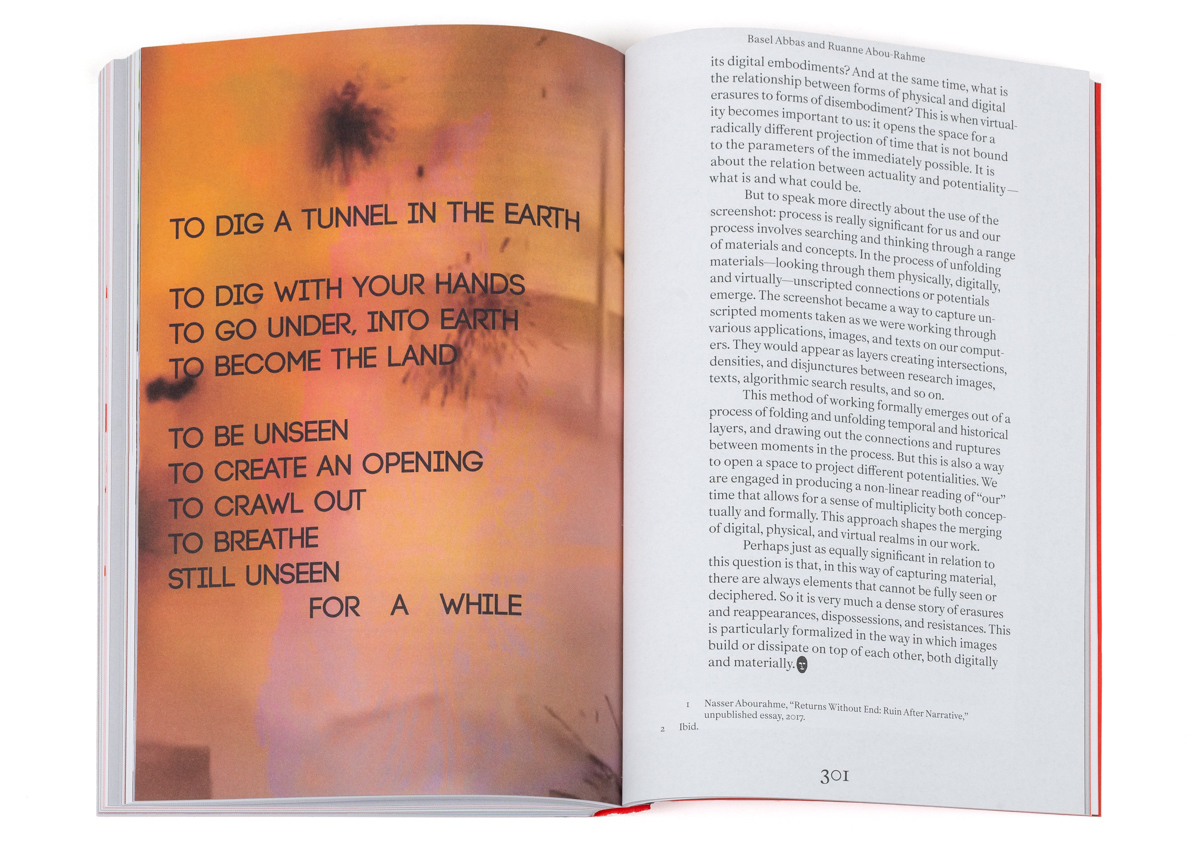
Spread from "Gestures of Remembrance: Basel Abbas and Ruanne Abou-Rahme in Conversation with Fawz Kabra," in A Grammar Built with Rocks, ed. Suzy Halajian and Shoghig Halajian (Wendy's Subway, 2025). Photo: Justin Lubliner
Location
Center for Art, Research and Alliances (CARA)
225 West 13th Street
New York, NY 10011
Accessibility information here.
About the event
This day-long program at CARA celebrates the publication of A Grammar Built with Rocks, an anthology published by Wendy’s Subway and co-edited by Shoghig Halajian and Suzy Halajian. Bringing together a range of feminist-decolonial texts and visual contributions, the publication foregrounds creative practices that respond to dispossession. It highlights how movement, transience, and improvisation offer alternative ways of being-together while being-in-place.
Inspired by Édouard Glissant’s theory of relational belonging, the program emphasizes interconnectivity among liberation struggles while remaining attentive to the specificity of place and history. Across disciplines and forms, the publication and program reflect a shared commitment to relational, cross-disciplinary exchange and collective modes of inquiry.
The day begins with a reading group facilitated by Amber Jamilla Musser that focuses on key concepts across the writings of Glissant and Suzanne Césaire—two prolific thinkers whose work serves as an undercurrent for many artistic practices featured in A Grammar Built with Rocks. A conversation between Laura al-Tibi, Adam HajYahia, and Fawz Kabra considers place-based methodologies developed by artists engaging landscapes shaped by ongoing colonial and ecological harm, and the ways refusals are articulated and aligned across multiple geographies. The program concludes with a lecture-performance by Ryan C. Clarke, followed by a performance by Muyassar Kurdi. Throughout the day, a playlist of audio recordings selected by A Grammar Built with Rocks contributors can be experienced in the listening room, with works by Bilna’es, Jheanelle Brown, Tia-Simone Gardner, Cauleen Smith, Santino Gonzales, and more.
This program is organized by Shoghig Halajian and Suzy Halajian as part of a weekend-long, multi-venue convening that engages their edited anthology A Grammar Built with Rocks. Additional events include The Trace of Land, a screening of short films at Anthology Film Archives on Friday, January 23; an After Hours Film School workshop and a listening session at Wendy’s Subway on Sunday, January 25.
The program at CARA is presented as part of that that, which transforms CARA into an expanded bookstore environment. In the weeks preceding CARA's spring exhibition of the Martinican poet and philosopher Édouard Glissant’s (1928–2011) personal art collection, we present a series of book launches, readings, and conversations shaped by the poetic force that animates Glissant’s chapter “That That” in his book Poetics of Relation.
More about the book here.
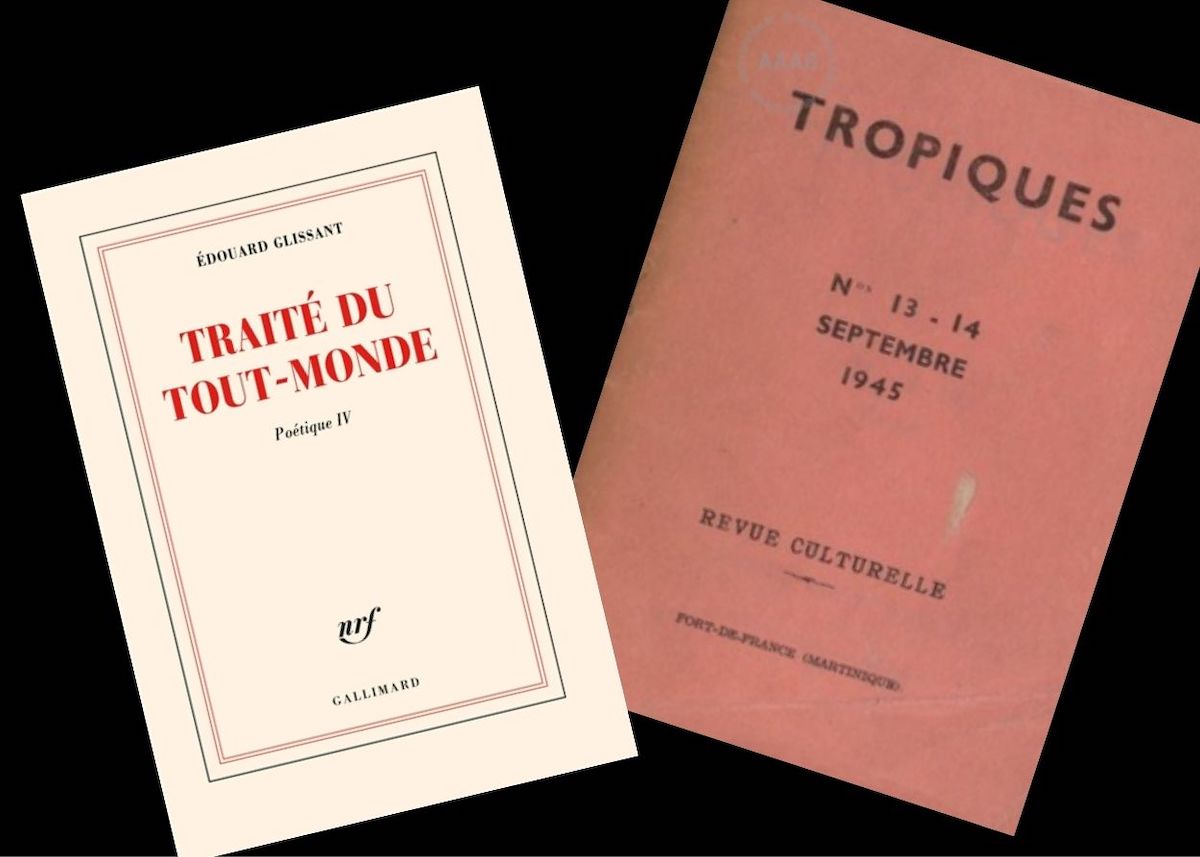
From left to right: Covers of Édouard Glissant's Traité du Tout-Monde: Poétique IV (Paris: Gallimard, 1997) and Tropiques, nos. 13/14 (1941–1945).
1pm | Writings of Dissent and Relation
Reading Group facilitated by Amber Jamilla Musser
This reading group, Writings of Dissent and Relation, facilitated by Amber Jamilla Musser, brings into dialogue two foundational texts in anticolonial thought: Édouard Glissant’s Treatise on the Whole-World (1997) and Suzanne Césaire’s “The Great Camouflage” (1945). Through close reading and group discussion, participants will consider how these writers articulate decolonization and the political stakes of poetry within broader struggles for liberation.
The session will also clarify important concepts such as Glissant’s definitions of opacity and relation, exploring how these ideas emerge from the lived conditions of Martinique and can be mobilized within contemporary artistic practice and critical research.
Free, RSVP here.
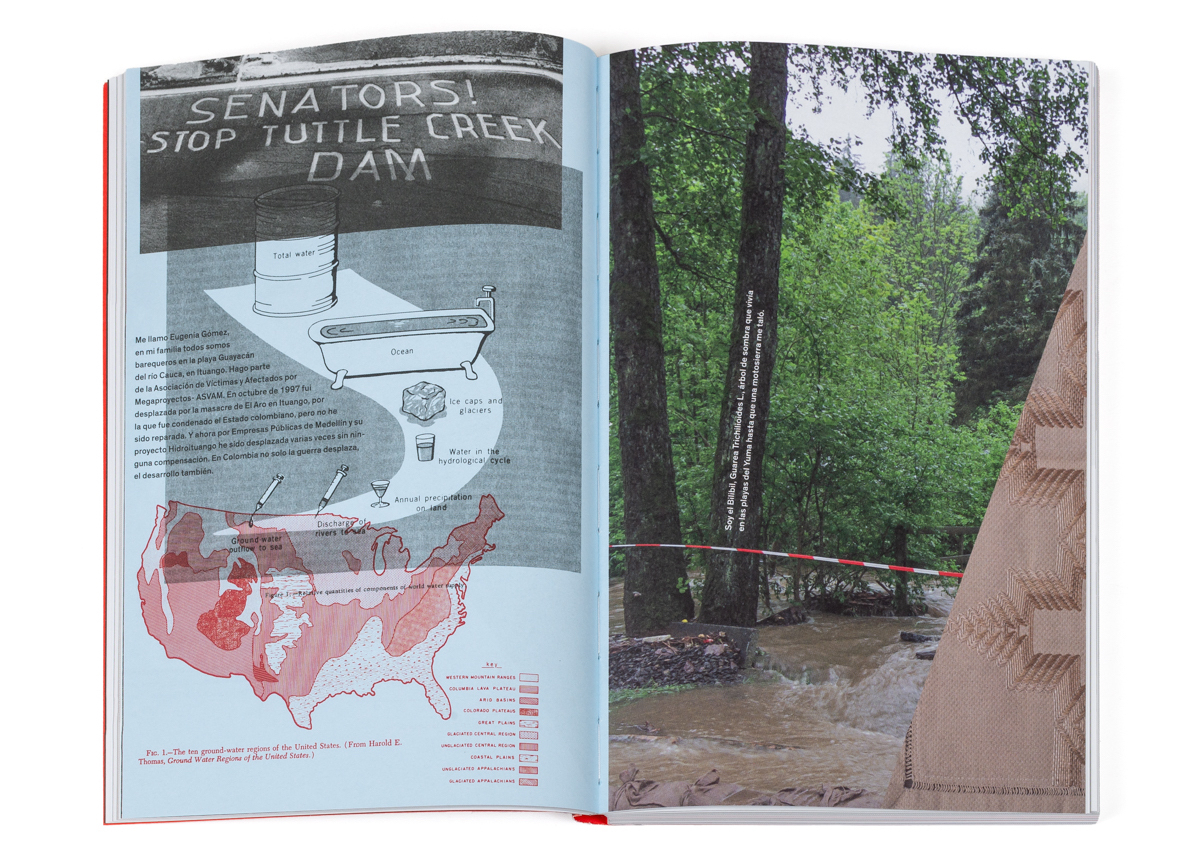
Spread from Carolina Caycedo's "Hunger as a Teacher," in A Grammar Built with Rocks, ed. Suzy Halajian and Shoghig Halajian (Wendy's Subway, 2025). Photo: Justin Lubliner
3pm | Conversation with Laura al-Tibi, Adam HajYahia, and Fawz Kabra
A conversation between Laura al-Tibi, Adam HajYahia, and Fawz Kabra, which considers place-based methodologies developed by artists engaging landscapes shaped by ongoing colonial and ecological harm, and the ways refusals are articulated and aligned across multiple geographies.
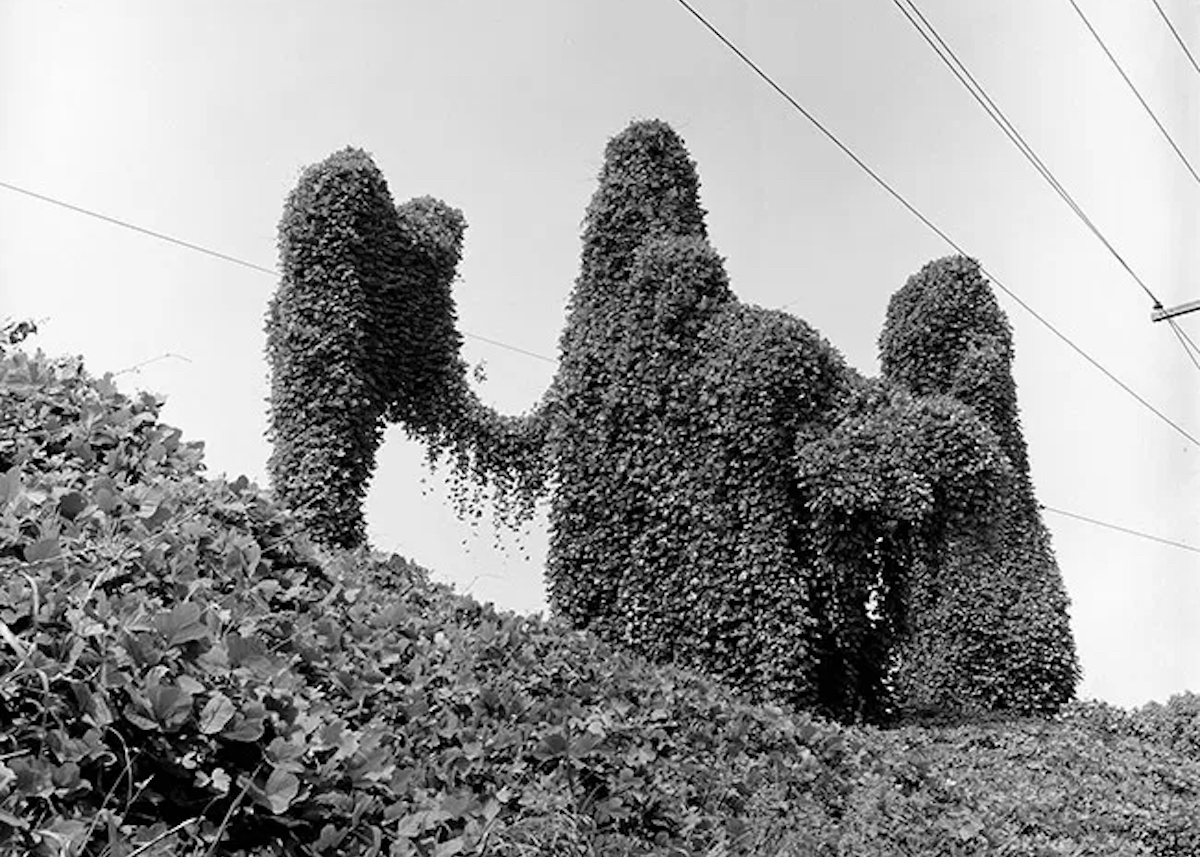
Formations of kudzu vines at Helena, Phillips County, Arkansas, July 5, 1963. Courtesy of the Arkansas State Archives
4:30pm | Kudzu Woodshedding
Lecture-Performance by Ryan C. Clarke
This lecture-performance engages the kudzu as a biological transmutation of exploitation, negation, and resistance—from negro to plant. In looking to the plant’s historical navigation of sociocultural and geological violence through geometric modes of growth, Clarke considers how it acts as a natural conduit for fugitivity, tracing how these developments result in a culture of abundance and aberration, even as the kudzu is understood as a symbol of abjection.
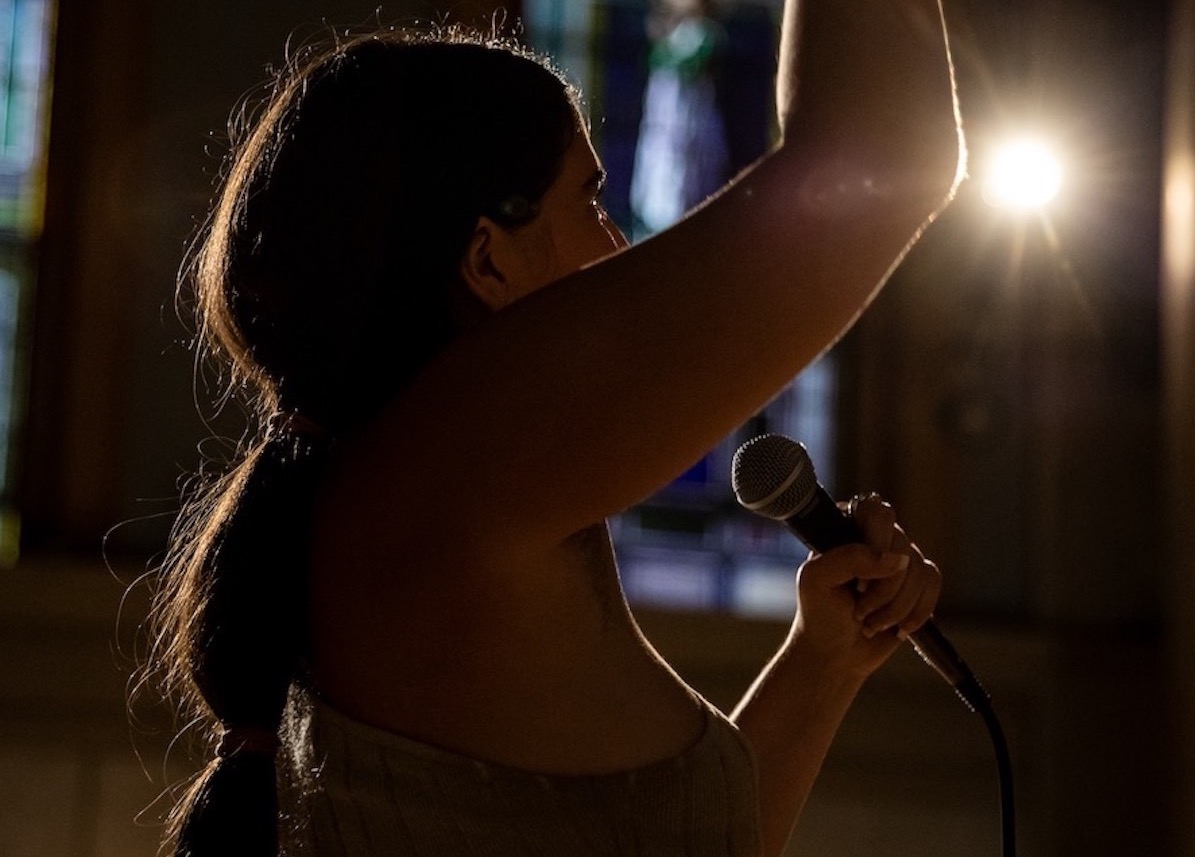
Muyassar Kurdi. Photo: Rachel Keane
5pm | Performance by Muyassar Kurdi
A ritualistic sound performance guided by the voice, unfolding through breath, resonance, and deep listening, carried by the body.
Free, RSVP to all other events here.
About the speakers
Laura al-Tibi is a writer and art historian specializing in nineteenth- and twentieth-century colonial representations in/of the Arab region. Her current research navigates between the politics of visibility and legibility, interrogating the visual grammars that dictate how Palestine is perceived and rendered legible. She has collaborated and published with Bilna’es, Dar Jacir, Jerusalem Quarterly, Parapraxis, and The Palestinian Museum, among others. She is currently a PhD candidate at Columbia University and Assistant Editor at Jerusalem Quarterly.
Ryan C. Clarke is a tonal geologist from the southeastern banks of the Mississippi, and an editor and curator at Dweller Electronics. His work has been published and presented by Rivers Institute for Contemporary Art and Thought, e-flux journal, Rhizome, Burnaway, Terraforma, Harvard’s Hiphop Archive & Research Institute, and MoMA PS1. With Dweller, Clarke produces festivals and publications that center the perspectives of Black electronic musicians.
Adam HajYahia’s work examines how aesthetic practices of image-making, performance, writing, and sound—both within and outside the art market—reflect on, simulate, initiate, and break apart sociality and political consciousness, particularly after the advent of colonial modernity. Through his work as a scholar, writer, and curator, he explores the at once harmonious and dissonant relationships between psychoanalysis and social organization, desire and labor, and settler-colonial and imperial economies, as well as their counterforms of political rebellion. He has recently served as part of the selection committee at the Biennale of Moving Images in Geneva (BIM’26) and published An Echo in Search of its Shadow: Aesthetics of the Repressed (Bilna’es, 2024), with new artworks by Haitham Haddad. His curatorial projects and scholarship have been presented and featured in various museums, universities, and cultural institutions, amongst which are the Sharjah Biennial 16 (2025), The Vera List Center at The New School (2024), The Mosaic Rooms (2023), The James Gallery at the CUNY Graduate Center (2023), MoMA PS1 (2022), The Berlin Biennale 12 (2022), and Mophradat (2022–24). He is currently Associate Curator at the Center for Human Rights & the Arts, Bard College, and is pursuing a PhD in Performance Studies at NYU.
Fawz Kabra is a curator and writer. She is co-founder of Brief Histories, a curatorial project and publishing platform currently based in New York. She has curated exhibitions at the Brooklyn Public Library; Columbia University Wallach Art Gallery, New York; the Center for Curatorial Studies, Bard College, NY; e-flux Screening Room, New York; BRIC Arts and Media House, Brooklyn; and the Palestinian Museum, Ramallah; and was Assistant Curator, Solomon R. Guggenheim Foundation, New York. Kabra has organized symposia at Global Art Forum 13, Dubai and The Armory Show, New York. Her writing and interviews appear in various exhibition catalogues as well as Art Papers, Canvas, e-flux Film, Ibraaz, and Ocula. Kabra’s editorial projects include Through the Ruins: Talks on Human Rights & the Arts (2023), published by the Center for Human Rights and the Arts, Bard College. She is visiting faculty at CCS Bard, and Curator of the Art and Design Gallery at Fashion Institute of Technology, New York.
Muyassar Kurdi is a Palestinian-American, New York City–based interdisciplinary artist. Her work encompasses sound art, voice, movement, painting, analog photography, and film. Her practice honors both the futuristic and the ancient through meditative movement and sonic exploration. Centered on embodiment and a non-linear approach rooted in improvisation, she explores memory, displacement, and the body in relation to nature.
Amber Jamilla Musser is a professor of English, Africana Studies, and Black, Race, and Ethnic Studies (BRES) at the CUNY Graduate Center. She writes and researches at the intersections of race, sexuality, and aesthetics. In addition to writing art reviews for The Brooklyn Rail. She has published widely in queer studies, black feminism, psychoanalysis, and critical theory. She is the author of Sensational Flesh: Race, Power, and Masochism (NYU Press, 2014), Sensual Excess: Queer Femininity and Brown Jouissance (NYU Press, 2018), and Between Shadows and Noise: Sensation, Situatedness, and the Undisciplined (Duke University Press, 2024).