


The Trace of the Land
Co-organized with Anthology Film Archives
A Grammar Built with Rocks Convening
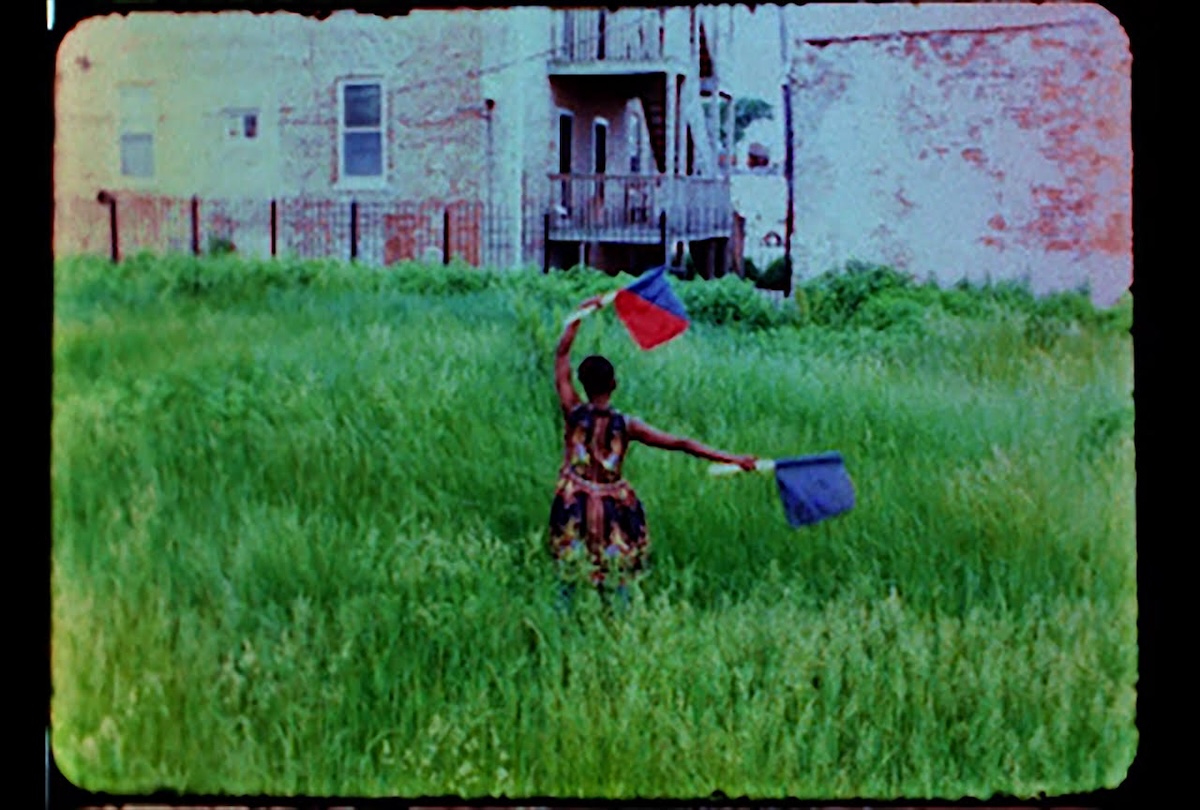
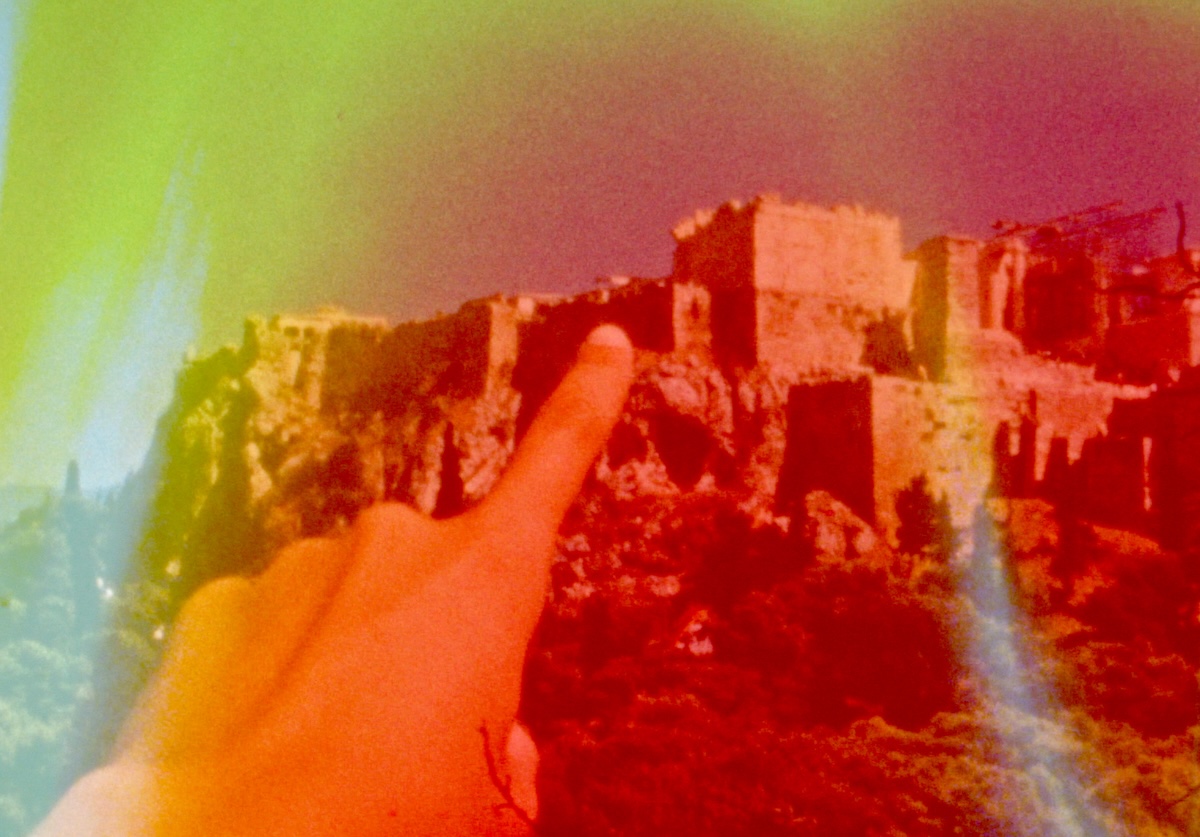
Still from Cauleen Smith, Lessons in Semaphore, 2015. 16mm-to-digital, color, silent, 4:23 min. Courtesy of the artist
Location
Anthology Film Archives
32 2nd Avenue
New York, NY 10003
Accessibility information here.
About the event
Purchase tickets here.
The Trace of the Land presents short moving-image works that engage contested land through creative and improvisational methodologies. The program brings together artists working across disparate histories of dispossession and violence, from redlining in Chicago to French colonial rule in Algeria, the settler-colonial destruction of the Gaza Strip, Brazil’s military oppression of Indigenous communities, and more. Engaging diverse counter-cartographic methods, these artists foreground embodiment, quotidian gestures, myth, and collective storytelling in their filmmaking. Their work privileges alternative approaches to perception and cultural memory, creating space for narratives of everyday resistance and communal belonging.
This screening is organized by Shoghig Halajian and Suzy Halajian as part of a weekend-long, multi-venue convening that engages their co-edited anthology, A Grammar Built with Rocks. Additional events include a reading group, conversation, and performances at the Center for Art, Research and Alliances (CARA) on Saturday, January 24; an After Hours Film School workshop and a listening session at Wendy’s Subway on Sunday, January 25.
More on the book here.
Program
+ Julien Creuzet, Crossroads, 2022. HD video animation, color, sound, 7:32 min.
+ Cauleen Smith, Lessons in Semaphore, 2015. 16mm-to-digital, color, silent, 4:23 min.
+ Christine Rebet, In the Soldier's Head, 2015. Animation shot on 16mm transferred to HD, color, sound, 4:25 min.
+ Ana Vaz, Apiyemiyekî?, 2019. DCP on server, color and black and white, 27:23 min.
+ Beatriz Santiago Muñoz, La Cueva Negra (The Black Cave), 2013. HD video, color, sound, 20 min.
+ Basma al-Sharif, Deep Sleep, 2014. HD transfer from Super 8mm film, color, sound, 12:45 min.
Runtime: approx. 80 minutes
Julien Creuzet, Crossroads, 2022
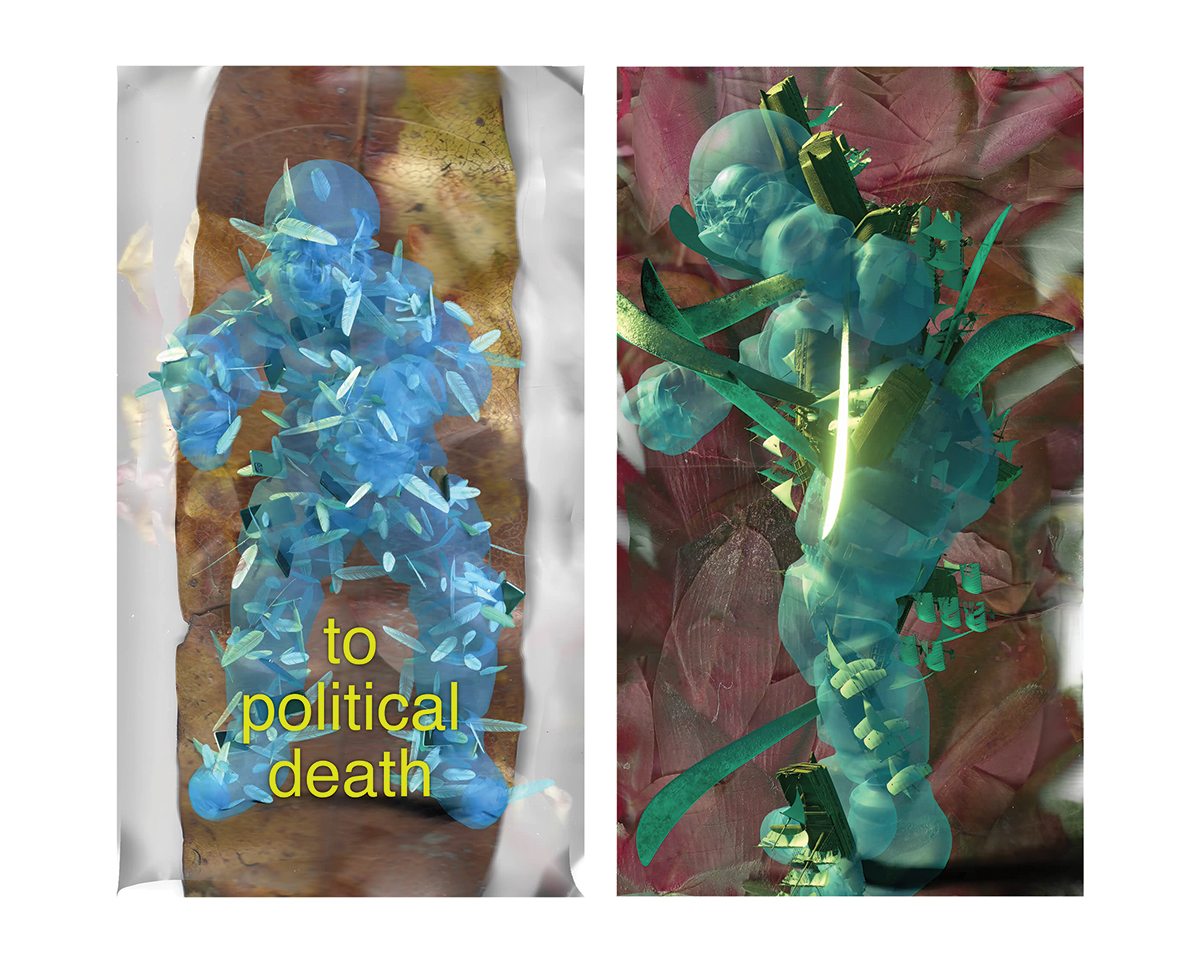
Stills from Julien Creuzet, Crossroads, 2022. HD video animation, color, sound, 7:32 min. Courtesy of the artist
Crossroads is the second video by Julien Creuzet that uses a character with a transparent body—a type of alter-ego for the artist. Here, his body is inhabited by feathers, fruits, shipwrecks, and viruses. He carries along what has shaped him: his obsessions, new experiences, and elements of the flora that surrounds him. Here, he learns to dance in the bèlè style. A legacy of the musical traditions of the enslaved peoples of Martinique, bèlè combines music and movement to create new forms of emotional expression, thereby becoming a vital form of resistance. The video is accompanied by texts, images of flora, sounds produced by Creuzet, and words spoken in Martiniquan Creole, suggesting a dialogue with the continuing influence of the Caribbean diaspora on contemporary music. Since ancient times, the idea of crossroads has encapsulated a rich mythological tradition and has been featured in countless tales and legends. It is often seen as a place haunted by supernatural powers, but it is also a poetic place—a place of encounter with the unexpected, a place of choice and destiny. Here, the character dances in the middle of the crossroads to take control of his life and open up its field of possibilities.
Cauleen Smith, Lessons in Semaphore, 2015
Still from Cauleen Smith, Lessons in Semaphore, 2015. 16mm-to-digital, color, silent, 4:23 min. Courtesy of the artist
In this 16 mm silent film by Cauleen Smith, shot on the South Side of Chicago in 2015, choreographer taisha paggett dances with two semaphore flags. The film plays out like a celebration of dialogue, despite the silence that surrounds it.
Christine Rebet, In the Soldier's Head, 2015
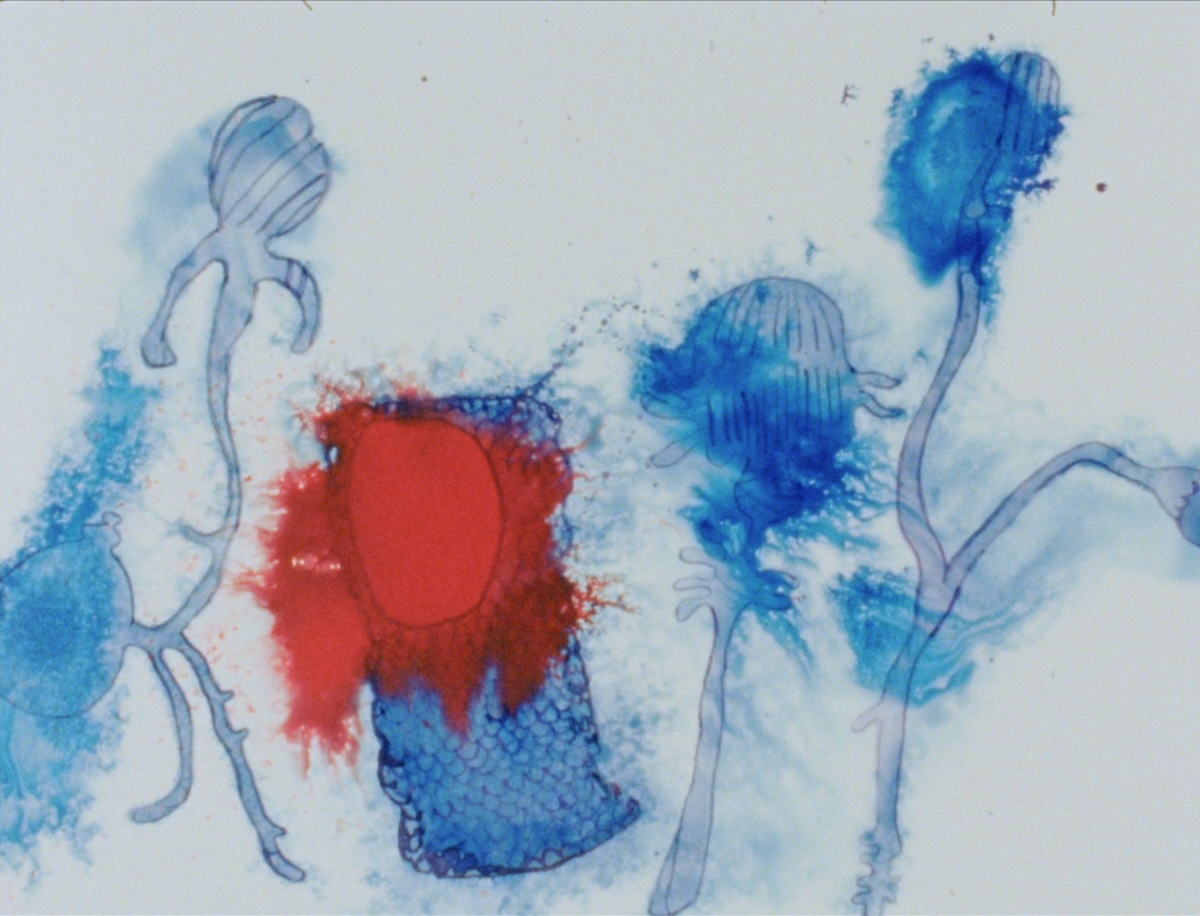
Christine Rebet, In the Soldier's Head, 2015. Animation shot on 16mm transferred to HD, color, sound, 4:25 min. Courtesy of the artist and Bureau, New York
In the Soldier’s Head evokes the traumas of war through the prism of the hallucinations of a soldier. Inspired by the artist’s father, a soldier in Algeria who then suffered from post-traumatic stress disorder, the video depicts the delusions flowing from a mind ravaged by violence: a vision grown from the inside out. Specters are conjured as the inanimate comes to life. Whirring machines sputter, gears turn and levers crank, reflecting the ceaselessly firing synapses of a hyperactive psyche. The helmet, like the soldier’s head itself, becomes a crucible for burning delusions fed by the violated land. Taking formal cues from the optical illusions and landscapes drawn in pre-cinematic entertainment, Rebet addresses issues of historical trauma through personal reinterpretation.
Ana Vaz, Apiyemiyekî?, 2019

Still from Ana Vaz, Apiyemiyekî?, 2019. DCP on server, color and black and white, 27:23 min. © All rights reserved by the artist / Courtesy of Light Cone
An archive of drawings made by the Waimiri-Atroari during their first literacy experience builds a collective visual memory from their learning process, perspective, and territory while documenting their encounter with “civilized man.”
Apiyemiyekî? is a cinematographic portrait that departs from Brazilian educator and Indigenous rights militant Egydio Schwade's archive—Casa da Cultura de Urubuí—found in his home at Presidente Figueiredo (Amazonas), where over 3,000 drawings made by the Waimiri-Atroari, a people native to the Brazilian Amazon, during their first literacy process are currently kept. The drawings document and construct a collective visual memory from their learning process, perspective and territory while attesting to a series of violent attacks they were submitted to during the Military Dictatorship in Brazil.
Beatriz Santiago Muñoz, La Cueva Negra (The Black Cave), 2013
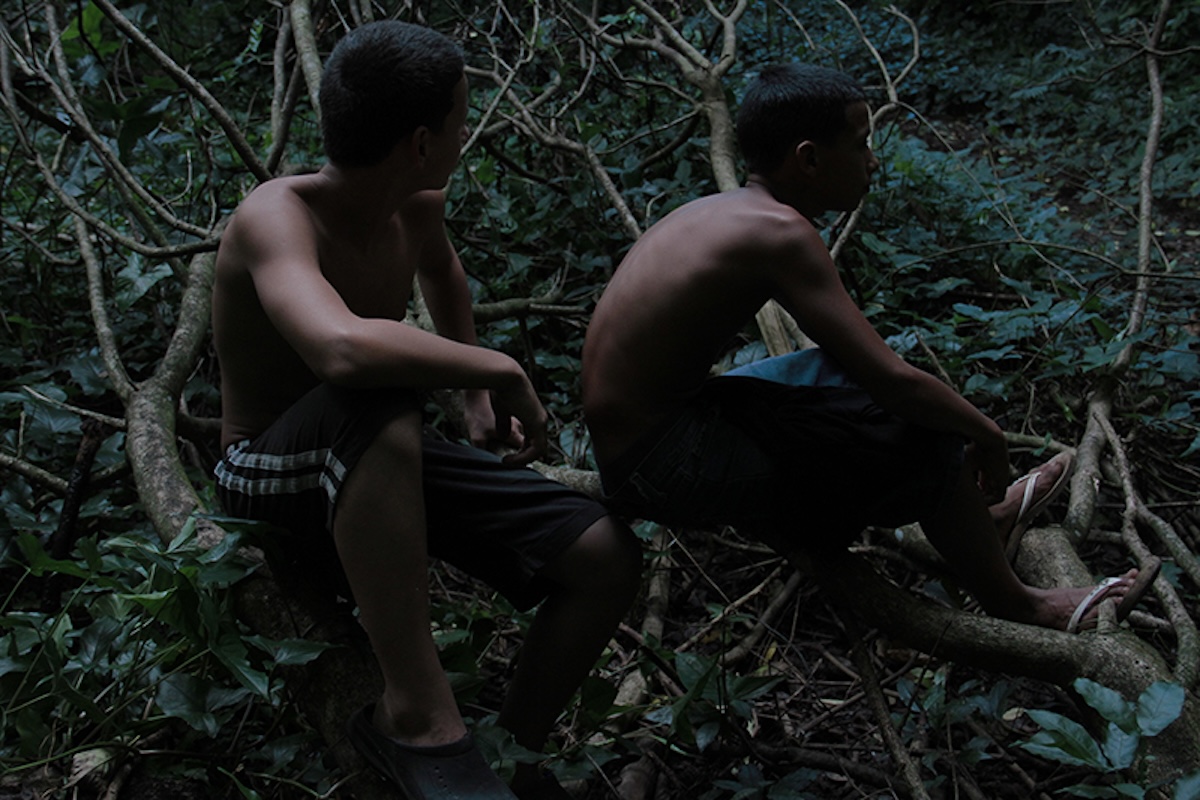
Still from Beatriz Santiago Muñoz, La Cueva Negra (The Black Cave), 2013. HD video, color, sound, 20 min. Courtesy of the artist
La Cueva Negra explores the Paso del Indio, an indigenous burial site in Puerto Rico discovered during the construction of a highway, and eventually paved over. Informed by interviews with local residents and archaeologists involved in the excavation, Beatriz Santiago Muñoz’s video offers a reflection on the origins and meanings of the site, which becomes, in the process, an allegory for the island’s convoluted history. The camera tracks two teenage boys wandering through the area, their freedom of movement and sense of curiosity symbolizing the romantic but ultimately misguided desire to find and preserve paradise.
Basma al-Sharif, Deep Sleep, 2014
Still from Basma al-Sharif, Deep Sleep, 2014. HD transfer from Super 8mm film, color, sound, 12:45 min. Courtesy of the artist
Temporarily restricted from travel to the Gaza Strip because of border conflict, I undertook the study and practice of autohypnosis with the purpose of bi-locating into multiple places at once. Paired with field recordings rendered into a binaural beat soundtrack, Deep Sleep is made up of a year’s worth of bi-location sessions recorded onto Super 8mm film. The result is a movement through the ruins of ancient civilizations as embedded in modern civilization-in-ruins. Deep Sleep draws from the historical avant-garde cinema to produce an invitation to move through landscapes and transcend geographical borders in a collective act that discards memory in exchange for a visceral present.
About the artists
Palestinian artist/filmmaker Basma al-Sharif explores cyclical political histories and conflicts. In films and installations that move backward and forward in history, between place and non-place, she confronts the legacy of colonialism through satirical, immersive, and lyrical works. Al-Sharif received an MFA from the University of Illinois at Chicago in 2007, and was a resident of the Fondazione Antonio Ratti in 2009 and the Pavillon Neuflize OBC at the Palais de Tokyo in 2014–15. She received a Jury prize at the Sharjah Biennial in 2009; was awarded a Visual Arts of the Fundación Botín in 2010 and Mophradat’s Consortium Commissions in 2018; was a fellow of the Berlin Artistic Research Grant Programme in 2022–2023; and was nominated for the Prix Award for 2024. In 2025 al-Sharif published her first monograph Semi-Nomadic-Debt-Ridden-Bedouins, and her film Morgenkreis (Morning Circle) won the Grand Prize at the 39th Internationale Kurzfilmtage Winterthur. Major exhibitions include: Hannah Ryggen Triennial, The Gothenburg Biennial, Pompidou Metz, de Appel, the Museum of the Art Institute of Chicago, MOMA, CCA Glasgow, SALT Galata, the Whitney Biennial, Here and Elsewhere at the New Museum, Berlin Documentary Forum, and Manifesta 8. Her films have screened in the international film festivals of Locarno, Toronto, Berlin, Mar del Plata, Milan, London, New York, Montreal, and Yamagata, among others. Basma is based in Berlin and represented by Galerie Imane Farés in Paris.
Julien Creuzet is a French-Caribbean artist, born in 1986, who works in Montreuil. A visual artist and poet, he actively intertwines these two practices via amalgams of sculpture, installation and textual intervention that frequently address his own diasporic experience. Inspired by the poetic and philosophical reflections of Aimé Césaire and Édouard Glissant on creolization and migration, Creuzet’s work focuses on the troubled intersection of the history of Martinique and the events of European modernity. Creuzet’s work has been exhibited at Brown Arts Institute, Providence; Ésam, Caen; Magasin CNAC, Grenoble; LUMA, Arles and Zurich; Camden Art Center, London; Centre Pompidou, Paris; Palais de Tokyo, Paris; CAN Centre d’Art Neuchâtel, Neuchâtel; Fondation d’Entreprise Ricard, Paris; Bétonsalon, Paris; and more. He has participated in numerous institutional group exhibitions at the Instituto Tomie Ohtake, São Paulo; Haus der Kulturen der Welt, Berlin; Performa Biennial 2023; 35th São Paulo Bienal and MAM da Bahia; 12th Liverpool Biennial; MCA Chicago; Musée Tinguely, Basel; National Gallery of Prague; Wesleyan University Center for the Arts, Middletown; Manifesta 13; MAM Paris; Kampala Biennale; and Gwangju Biennale. Creuzet represented France at the 60th Biennale de Venezia in 2024. He is the recipient of the Etants Donnés Prize (2022), BMW Art Journey Award (2021), Camden Arts Centre Emerging Artist Prize (2019), and was nominated in 2021 for the Marcel Duchamp Prize.
Christine Rebet (b. Lyon, France) lives and works in Paris, France. Rebet received her BFA from Central, Saint Martins School of Art and Design, London, and her MFA from Columbia University, New York. Her work is based in drawing and develops into forms ranging from animation to the environment, installations, and performance art. At the heart of her work is the elaboration of historical traumas in the context of a personal reinterpretation and a consequent reanimation. Rebet has exhibited and held performances in various international contexts including: Frac Picardie, Amiens; Jeu de Paume, Paris; Fondation EDF, Paris; Musée d’art contemporain de Lyon; Parasol Unit, London; Bureau, New York; LACE, Los Angeles; Human Resources, Los Angeles; Québec City Biennale; Lofoten Biennale, Norway; Galerie Imane Farès, Paris; Kunsthal KAdE, Amersfoort; Grieder Contemporary, Zurich; AlbumArte, Rome; Unge Kunstneres Samfund, Oslo; SculptureCenter, Long Island City; Institute of Contemporary Art, Singapore; Foundation Cartier, Paris; Site Sante Fe; Le Magasin, Grenoble; Shanghai Art Museum; Kamel Mennour Gallery, Paris; and Taka Ishii Gallery, Tokyo. Her films have been screened at various festivals in international locations including: Porto/Post/Doc; Beijing International Short Film; Zinebi - Festival Internacional de Cine Documental y Cortometraje de Bilbao; Centre Dramatique National, Nanterre; Sursock Museum, Beirut; The Berlinale Short Film Competition; Hong Kong International Film Festival; Norwegian Film Festival; Fruehsorge Contemporary Drawing, Berlin; Hollywood Hookah, Los Angeles; Oberhausen Film Festival; Jakarta International Film Festival; and London Film Festival. Forthcoming museum solo exhibitions include Christine Rebet: Films, Des Moines Art Center, Iowa, 2026.
Beatriz Santiago Muñoz is an artist whose expanded moving image work is entangled with Boalian theater, expanded cinema, and feminist practices. She tends to work with non-actors, and incorporates improvisation into her process. Her recent work is on the sensorial unconscious of anti-colonial movements and feminist experiments with language and narrative. Recent exhibitions include: the 34th Sao Paulo Biennial, the Momenta Biennale in Montreal, and Art of the Real at Lincoln Center, among others. Her work is part of public and private collections such as the Museum of Modern Art, Guggenheim and Kadist. She has received a Creative Capital grant, a USA Fellowship, a Herb Alpert Award in the Arts, the 2021 Artes Mundi Prize, which was shared among all sevent nominees, and the CARA Fellowship.
Cauleen Smith is an interdisciplinary filmmaker based in Los Angeles.
Artist and filmmaker Ana Vaz was born in the Brazilian Midwest, inhabited by the ghosts buried by the modernist federal capital Brasília. Her filmography activates and questions cinema as an art of the (in)visible and as an instrument capable of transforming the human perception, expanding its connections and becoming with other forms of life—both other-than-human and spectral. Consequences or expansions of her cinematography, her activities are also incorporated into writing, critical pedagogy, installations or collective walks.